Let me tell you something I’ve learned from years of doing this work: the moment you see an inspector walking onto your site, your stomach drops. It doesn’t matter how prepared you think you are. There’s always that split second of “did we miss something?”
Here’s the thing though. If you’re running your site right every single day, an inspection shouldn’t scare you. It should be a non-event. The problem is, a lot of contractors only think about inspections when they’re standing face-to-face with an OSHA compliance officer or a DOB inspector.
That’s backwards. What you need is a solid construction site inspection checklist that you use daily, weekly, and monthly. That way, when the real inspector shows up, you’ve already caught and fixed the problems they’d be looking for.
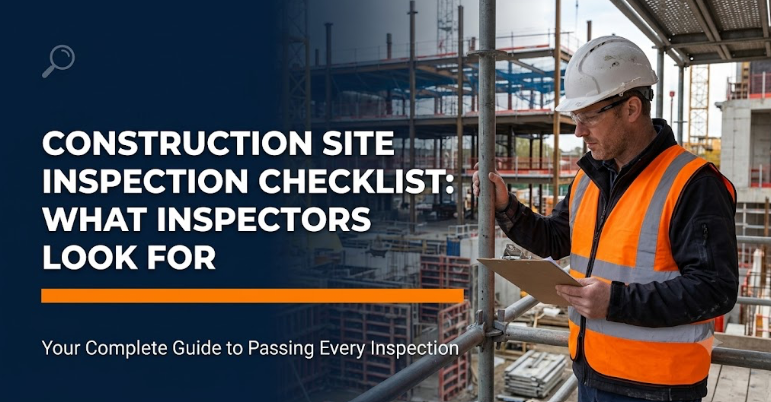
In this guide, I’m going to walk you through exactly what inspectors look for on construction sites. Plus, I’ll give you a ready-to-use checklist that covers everything from fall protection to fire safety. Let’s get into it.
Who Inspects Construction Sites and What Triggers an Inspection?
Before we get to the checklist, you need to understand who might show up on your site and why. In NYC, you’re dealing with multiple agencies, and each one has its own focus.
OSHA (Occupational Safety and Health Administration)
OSHA is the federal agency that handles workplace safety. They inspect construction sites for compliance with federal safety standards under 29 CFR 1926 (OSHA Construction Standards). OSHA inspections can be triggered by:
- Employee complaints (workers call in safety concerns)
- Severe injuries or fatalities (mandatory reporting within 24 hours for hospitalizations, 8 hours for fatalities)
- Referrals from other agencies
- Targeted inspection programs (high-hazard industries)
- Follow-up inspections (checking if previous violations were corrected)
NYC Department of Buildings (DOB)
If you’re working in New York City, the DOB has its own inspection authority. DOB inspectors focus on compliance with the NYC Construction Codes, Local Laws, and permit requirements. They show up for:
- Scheduled inspections (required at various stages of construction)
- Complaints (from neighbors, workers, or other agencies)
- Accidents or incidents on site
- Permit violations (work being done without proper permits)
NYC Department of Environmental Protection (DEP)
DEP inspectors check for environmental compliance: dust control, stormwater management, noise restrictions, and hazardous material handling. They’re less frequent but can shut down your site for environmental violations.
Fire Department (FDNY)
FDNY inspectors focus on fire safety: fire extinguisher placement, hot work permits, flammable material storage, and emergency access. They typically inspect sites with hot work operations or when complaints are filed.
What Inspectors Look For: The Top Areas of Focus
Alright, here’s the good stuff. Based on years of experience and OSHA’s own enforcement data, here are the areas inspectors focus on most. These are also the most commonly cited violations.
1. Fall Protection (OSHA’s #1 Most Cited Violation)
Fall protection tops OSHA’s violation list every single year, and for good reason. Falls are the leading cause of death in construction, accounting for over 350 fatalities annually (BLS Census of Fatal Occupational Injuries).
Here’s what inspectors check:
- Guardrails: Are they installed on all open edges and holes? Top rail at 42 inches, mid-rail at 21 inches?
- Safety nets: Are they properly installed and inspected where guardrails aren’t feasible?
- Personal fall arrest systems (PFAS): Are harnesses being worn correctly? Are lanyards and anchor points inspected daily?
- Leading edge protection: Is there a designated competent person monitoring work near unprotected edges?
- Hole covers: Are all floor holes, shafts, and skylights covered and labeled?
- Scaffolding: Is it fully planked with guardrails on all open sides? Are access points safe?
Pro tip: OSHA requires fall protection at 6 feet in general construction. But in steel erection, it’s 15 feet for connecting workers and 30 feet for other workers. Know your specific requirements.
2. Hazard Communication (HazCom)
Inspectors want to see that your workers know what chemicals they’re working with and how to protect themselves. Here’s what they’ll look for:
- Safety Data Sheets (SDS): Do you have current SDS for every chemical on site? Are they accessible to all workers?
- Chemical labeling: Are all containers properly labeled with product identity and hazard warnings?
- HazCom program: Do you have a written hazard communication program?
- Training records: Can you prove workers have been trained on the chemicals they use?
- PPE for chemical handling: Are workers using the right gloves, goggles, and respirators for the chemicals on site?
3. Scaffolding Safety
Scaffolding violations are consistently in OSHA’s top 10 most cited violations. Here’s what inspectors check:
- Competent person: Was the scaffolding erected, moved, dismantled, or altered under the supervision of a competent person?
- Inspection records: Has the scaffolding been inspected before each work shift?
- Guardrails: Are top rails, mid-rails, and toe boards installed on all open sides and ends?
- Access: Are workers using proper access (ladders, stair towers) instead of climbing cross-braces?
- Capacity: Is the scaffolding loaded within its rated capacity?
- Platform construction: Are platforms fully planked with no gaps wider than 1 inch?
- Mud sills and base plates: Are they properly installed on stable footing?
4. Respiratory Protection
When workers are exposed to dust, fumes, vapors, or oxygen-deficient atmospheres, inspectors will check:
- Written respiratory protection program: Do you have one that meets OSHA standards (OSHA Respiratory Protection Standard)?
- Medical evaluations: Have workers been medically cleared to wear respirators?
- Fit testing: Has each worker been properly fit-tested for their respirator?
- Training: Do workers know how to use, maintain, and inspect their respirators?
- Cleaning and storage: Are respirators cleaned, disinfected, and stored properly?
5. Electrical Safety
Electrical hazards are everywhere on construction sites. Inspectors will look for:
- GFCI protection: Are all temporary outlets and extension cords protected by ground-fault circuit interrupters?
- Assured equipment grounding conductor program: Or are you using GFCIs as an alternative?
- Lockout/tagout: Is there a program for de-energizing equipment before maintenance?
- Overhead power lines: Are workers maintaining safe distances (10 feet minimum for lines up to 50kV)?
- Damaged cords and tools: Are there any frayed wires, missing ground prongs, or damaged insulation?
- Wet conditions: Are electrical tools and equipment protected from moisture?
6. Personal Protective Equipment (PPE)
Inspectors will walk your site and check if workers are wearing the right PPE for their tasks:
- Hard hats: Are they being worn in all areas where head injuries are possible? Are they inspected for damage?
- Safety glasses: Are workers using eye protection with side shields? Face shields for grinding and cutting?
- High-visibility vests: Are they being worn near vehicle traffic and equipment?
- Foot protection: Are workers wearing steel-toe boots or equivalent?
- Hearing protection: Is it provided and used in high-noise areas (above 85 decibels)?
- Gloves: Are workers using task-appropriate gloves (cut-resistant, chemical-resistant, etc.)?
7. Fire Prevention
Fire safety is critical, especially on sites with hot work operations:
- Fire extinguishers: Are they available, properly charged, and accessible within 100 feet of any point on the site?
- Hot work permits: Is there a permit system for welding, cutting, and brazing?
- Fire watch: Is a fire watch posted during and for 30 minutes after hot work?
- Flammable material storage: Are flammable liquids stored in approved containers and cabinets?
- Emergency exits: Are all exits clearly marked and unobstructed?
- Smoking policies: Is smoking restricted to designated areas away from flammable materials?
8. Excavation and Trenching
Trenching is one of the most dangerous construction activities. Inspectors will check:
- Protective systems: Is there a sloping, shoring, or shielding system for trenches 5 feet or deeper?
- Competent person: Has a competent person inspected the trench before each shift and after any hazard increase?
- Access/egress: Is there a safe means of entry and exit within 25 feet of all workers?
- Spoil placement: Is excavated material kept at least 2 feet back from the trench edge?
- Water accumulation: Is there water in the trench? If so, what precautions are in place?
- Utility location: Have underground utilities been located and marked before digging?

Your Construction Site Inspection Checklist
Alright, here’s your ready-to-use checklist. Print this out, laminate it, and use it for your daily site inspections. This covers everything an OSHA or DOB inspector would look for.

Daily Inspection Checklist
| Area | What to Check | Pass/Fail | Notes |
| Fall Protection | Guardrails installed on all open edges? | ☐ | |
| PFAS harnesses inspected for damage? | ☐ | ||
| Floor holes covered and labeled? | ☐ | ||
| Scaffolding guardrails and planking intact? | ☐ | ||
| PPE | All workers wearing hard hats? | ☐ | |
| Safety glasses with side shields? | ☐ | ||
| High-visibility vests near traffic? | ☐ | ||
| Steel-toe boots on all workers? | ☐ | ||
| Scaffolding | Inspected by competent person today? | ☐ | |
| Access ladders secure and undamaged? | ☐ | ||
| No overloaded platforms? | ☐ | ||
| Electrical | GFCI protection on all temporary outlets? | ☐ | |
| No damaged cords or tools? | ☐ | ||
| Safe distance from overhead power lines? | ☐ | ||
| Fire Safety | Fire extinguishers accessible and charged? | ☐ | |
| Hot work permits posted? | ☐ | ||
| Exits clear and marked? | ☐ | ||
| Hazard Communication | SDS accessible for all chemicals on site? | ☐ | |
| All containers properly labeled? | ☐ | ||
| Housekeeping | Walkways clear of debris and tripping hazards? | ☐ | |
| Materials stored securely? | ☐ | ||
| Waste containers available and not overflowing? | ☐ |
Weekly Inspection Checklist
| Area | What to Check | Pass/Fail | Notes |
| Excavation/Trenching | Protective systems in place (5+ ft deep)? | ☐ | |
| Competent person inspection documented? | ☐ | ||
| Access/egress within 25 feet of workers? | ☐ | ||
| Spoil pile 2+ feet from edge? | ☐ | ||
| Cranes and Hoisting | Operator certifications current? | ☐ | |
| Daily inspection log up to date? | ☐ | ||
| Load charts posted in cab? | ☐ | ||
| Rigging equipment inspected? | ☐ | ||
| Tools and Equipment | All tools in good working condition? | ☐ | |
| Guards in place on power tools? | ☐ | ||
| Pneumatic tools secured with whip checks? | ☐ | ||
| Training Records | New worker orientation completed? | ☐ | |
| Toolbox talk conducted this week? | ☐ | ||
| Training documentation up to date? | ☐ |
Monthly Inspection Checklist
| Area | What to Check | Pass/Fail | Notes |
| Safety Program Review | Site-specific safety plan updated? | ☐ | |
| Emergency procedures posted and current? | ☐ | ||
| First aid kits stocked and accessible? | ☐ | ||
| Emergency contact list posted? | ☐ | ||
| Documentation | OSHA 300 log up to date? | ☐ | |
| Inspection reports filed? | ☐ | ||
| Incident/near-miss reports completed? | ☐ | ||
| Subcontractor safety documentation current? | ☐ | ||
| Environmental | Erosion and sediment controls in place? | ☐ | |
| Dust control measures active? | ☐ | ||
| Noise monitoring conducted if needed? | ☐ | ||
| Stormwater pollution prevention plan followed? | ☐ |
How to Prepare for an OSHA or DOB Inspection
Look, even with daily inspections, the real thing can still make you nervous. Here’s how to handle it when an inspector actually shows up:
Before the Inspection
- Designate a site representative: This should be your site safety manager or competent person. They’ll accompany the inspector at all times.
- Gather your documentation: Have your safety plan, training records, inspection logs, SDS sheets, and OSHA 300 log ready to go.
- Walk the site first: Do a quick walkthrough to catch any obvious issues before the inspector does.
- Brief your crew: Let your workers know an inspection is happening. Tell them to answer questions honestly but to ask for clarification if they don’t understand.
During the Inspection
- Stay professional and cooperative: Don’t be adversarial. The inspector is doing their job. Be respectful and helpful.
- Take notes: Document everything the inspector looks at, every question they ask, and every concern they raise.
- Take photos: Photograph any areas the inspector flags. This helps you understand the issue and track corrections.
- Don’t volunteer information: Answer questions directly, but don’t offer up additional information that wasn’t asked for.
- Ask for clarification: If the inspector cites a violation, make sure you understand exactly what the issue is and what standard they’re referencing.
After the Inspection
- Review the findings: Go over the inspection report with your team immediately.
- Correct violations promptly: OSHA gives you a specific abatement period. Fix violations as quickly as possible and document the corrections.
- Update your safety plan: If the inspection revealed gaps in your safety program, update your site-specific safety plan accordingly.
- Train your crew: Use the inspection findings as a teaching moment. Conduct a toolbox talk on the violations found and how to prevent them in the future.
Common Inspection Violations and How to Avoid Them
Here are the violations I see most often on construction sites. If you’re making any of these mistakes, fix them now before an inspector catches them:

Violation #1: No Fall Protection at 6 Feet or Higher
This is the most cited violation for a reason. Workers on roofs, scaffolding, and elevated platforms without proper fall protection. The fix? Install guardrails, use personal fall arrest systems, or set up safety nets. No exceptions.
Violation #2: Inaccessible or Missing Safety Data Sheets
You’ve got chemicals on site but no SDS available for workers. Or the SDS is locked in a trailer nobody can access. The fix? Keep a binder of SDS at the job site trailer and make sure every worker knows where to find it.
Violation #3: Damaged or Missing Scaffolding Components
Missing guardrails, cracked planks, broken access ladders. Scaffolding that hasn’t been inspected in weeks. The fix? Inspect scaffolding before every shift. Tag and remove damaged components immediately.
Violation #4: No GFCI Protection on Temporary Power
Extension cords and temporary outlets without ground-fault circuit interrupter protection. This is a shock hazard, especially in wet conditions. The fix? Use GFCI outlets or portable GFCI devices on all temporary power.
Violation #5: Inadequate Trench Protection
Trenches deeper than 5 feet without sloping, shoring, or shielding. This is a death trap. Trench collapses happen fast and without warning. The fix? Always use a protective system for trenches 5 feet or deeper. And have a competent person inspect before every shift.
When to Hire a Construction Safety Inspector
Sometimes you need a fresh set of eyes. If you’re not confident in your ability to catch everything, or if you’ve had violations in the past, bringing in a professional construction safety inspector can be a game-changer.
Here’s when it makes sense to hire an outside inspector:
- Before a major project phase to catch issues before they become violations
- After receiving OSHA citations to ensure corrections are proper and prevent future violations
- When starting work in a regulated environment like NYC with DOB oversight
- If you don’t have a dedicated safety person on your team
- For third-party documentation that demonstrates due diligence to clients and insurers
Our team at Safety Compliance Advisors provides comprehensive construction inspection services across NYC. We know exactly what OSHA and DOB inspectors look for because we’ve been on both sides of the table. We’ll walk your site, identify issues, and give you a detailed report with corrective actions.